Monday, 16 May 2011

Building Paper/Wrap

  • Use house wrap when framing a home to block out moisture and unwanted air.
  • Housewrap defines all synthetic replacement materials for sheathing tar paper
  • Housewrap functions as a weather-resistant barrier
  •  preventing rain from getting into the wall assembly while allowing water vapor to pass to the exterior.
Major types of housewrap

In relation to weather tightness, what are the 4 D’s?

·         Deflection – keeping water away from potential entry points
·         Drainage – providing means of removing water that does enter.
·         Drying – allowing any remaining moisture to be removed by ventilation or diffusion.
·         Durability – providing materials with appropriate durability.
 

drainage cavity

The function of a drained cavity is to provide a back-upshould occasional water get past the cladding.

  • the cavity is soley a secound line of defence should a failure of the weatherskin occur.
  • minimum cavity depth of 20mm.
  • specifying continuous vertical battens.
  • ensure the cavity always drains outside the building.
  • ensure the cavity is vermin-proofed.
  • closinf off the top of the cavity from all roof and eaves spaces
 

Cavity battens

Battens to form drained cavities for lightweight cladding are fixed to the wall framing after the installation of the wall wrap.

Reqiurements for timber battens are:
  • installion after the wall wrap.
  • a minimum thinkness of 20mm.
  • a treatment to h3.1 minimum
  • hot dip galvanised fixings(stainless steel fixings are required for ACQ and CuAz treated timber battens).
  • vertical installation-if short cross battens are required the muxt be 100mm max.
  • have a 50mm gap between them and a veritcal batten at each end and be installed with a slope to drained water to one end.

may 9th

Today we cut self-supporting paper for the roof it was cut at 1250x3500. We cut five lengths for the whole roof.  We measured out the roof so we could pre-drill the hole for the screws (hex -head) on the colour-steel sheets. We set a string line out the front of the front fascia at 50mm out for the distance and a guild for the colour-steel.
Placed self-supporting paper down on the roof and stapled to the purlins. Once one length of self-supporting paper is down and stapled we place a colour-steel sheet on top. Lined up flush with the side and the 50mm on the front fascia. When in position drilled down to purlins.

Monday, 2 May 2011

Roof rafters

measured out spacing and support blocks for insulation. . . . .

installing timber blocksfor roof insulation. . . .

May 2nd

BBQ TABLE

As a class we had to construct a bbq table and were split up to do different parts of the table. . . .
the bbq table had been treated h3 was the level of treatment. . . . .
the timber was 90x45. . . . .
Nadeem, tonga and i measured and cut fourteen 1500mm lengths for the top and seats of the table. . . .


we plained the sharpe edges and waited for everybody to finish there parts. . . . .soon after we tacted the two leg foundations. . . . .drilled and bolted them together. . . .finished off with nailing the top

Monday, 11 April 2011

April 11th

measured out position of rafters. . . .cut and hammered in . . . .chizeled and got steel straps really for tuesday

April 6th

cut and measured floor bracing. . . . .hammered in and plained off un-flushed surfaces. . . .once that was finished we brought each wall framing over. . . .braced to the floor, while we square up the walls. . . .as soon as we squared up the walls we fixed them together and to the floor. . . .we braced it off so it doesnt fall over

April 5th

started in the computer room and started up our smart sheet. . .  .the smart sheet is designed to organise your time and what you have spent on materials. . . . .shows on a chart how much you have progressed

Monday, 4 April 2011

April 4th

today Kerry split up our team and we worked in two teams of three. . . . . one team bulit one wall and the other built the other small wall. . . . . .measured out top and bottom plate. . . .found the high point and short point from our other frames. . . . .nailled the short point and high point to bottom and top plates. . . . .used that to find the measurements of of our studs . . . . .cut and placed studs in. . . .  .measured out postion for lintel and nogs. . . .  . and wall was finished

30th March

today we built the front frame of the sleepout. . . . .measured top plate and bottom plate and placed all the measurements for the studs, understuds and the packers. . . . .cutt all timber and hammered framing together. . . . .measured up nogs and lintel. . . . . measured out postion for lintel where the sliding door is sitting. . . .

Monday, 28 March 2011

29th March

today consist of the first period in the class room dicussing the next phase  of the sleepouts construction. . . . .after that we started where we left off yesterday. . . . .we lined up our bottom plate and top plate and made them opposite each other. . . . .lined up  our studs and nailed them in. . . .lined up nogs and nailed them too. . .  ..squared everythink up and finished the day off in the i.t room. . .

28th March

we measured and cut timber for wall framing. . . . and ready to be assembled


23rd March

Constructed boundry braces and set up the boundry. . . .used string line and dumpy level to square up . . . . used batterboards to hold the square and nailed to the ground.


21st March

Today we did the final stage to our saw stools and finished the day off with a disscussion on how we could do it better

Monday, 14 March 2011

15th March

Today our class established itself in the workshop. . . .we constructed our saw stool legs ( cut angle on the legs and then used plainer to smooth and even the edge. . . .glued legs where timber is going to sit and nailed them into place. . . . place glue into gaps and left over saw dust. . . .left to dry. . . .draw up angles for saw stool bracing. . . .after lunch break in computer room doing assignment on timber. . . .

Timber assignment

Timber Assignment
5 types of timber used in New Zealand construction. . .

1.      Rimu (red pine)
2.      Kahikatea (White Pine)
3.      Kauri
4.      Matai
5.      Rewa Rewa (Honeysuckle)

What’s the difference between exotic, native and imported timber and give an example of each. . .

1.      Exotic – imported and grown in new region(Oak–European)
2.      Native – always grown in the region it is from (NZ-RIMU)
3.      Imported – brought over from another region (Fijian-Kauri)

How is timber treated to protect it from insect and fungal (rot) attack?

It is sprayed with a chemical. . . .

How does timber treatment fit in with the New Zealand Building Code (Nzbc)?

Timber treatment
H3.1 and H3.2 treated timber - Identification and use
In 2004, Acceptable Solution B2/AS1 was amended to cite NZS 3602: 2003 Timber and Wood-based Products for Use in Building. The Standard introduced a number of changes including the introduction of two new hazard classes for treated timber - H3.1 and H3.2.
Although both H3.1 and H3.2 can be used for timber exposed to exterior conditions not in ground contact, there are important differences between them. This article is a fresh reminder of their relative uses and how to identify them on site.

14th March

today started in the class talking about the dumpy level. . . . .the tutors created a exercise that simulated the set up and outlining of the foundation of a building. . . . .we used the dumpy level to found out how to make the suface that we were building on level on the materials we were using. . . .used string line to check if everythink is square. . . .

Dumpy Level - make sure little bubble in the centre of the big bubble to ensure level.
                     - adjust feet to get the accurate level.

DUMPY 1. set up tripod
               2. attach dumpy level
               3. adjust feet


Tuesday, 8 March 2011

9th March

practical lesson - started saw horse and completed drawing board got 14/20 im not impressed with myself. . . .last period in class - talking about next week and had a test on extension leads. . . .finishd the day off in the library. . .

Monday, 7 March 2011

8 March

started in the class room with chris. . . .he gave us the infomation about what the learning centre provides for you. . . and help us programme our calcutalators. . . after first break we had practical and continued with our sketch boards. . . .we had a literacy and numeracy assessment to finish of the day. . .

8 March

Tuesday, 1 March 2011

March 2nd

Today started in a practical lesson. . . .we drilled a hole into our boards to get a line for the jizsaw to create our sketch boards handle. . . .the next task was to measure up the lines for the pencil holder. . . .measured up and used the router to create the pencil holder. . . .it was a success lol. . . . .last period was held in the liabrary. . . .jus to catch up on our bloggs

March 1st

first off, in the morning we research power tools. . .after first break and got introduced to the biscuit cutter. . . .we first used or biscuit cutter to constructed boards for our streching table. by cuttin slots into the side of it. . . use biscuits and glue to hold it together and clamped it for the night. . . . constructed a angle for our boards to sit on. . . .

Monday, 28 February 2011

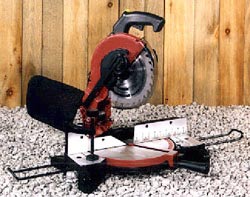
Dropsaw

A power miter saw, also known as a chop saw or drop saw, is a power tool used to make a quick, accurate crosscut in a workpiece. Common uses include framing operations and the cutting of molding. Most miter saws are relatively small and portable, with common blade sizes ranging from eight to 12 inches.
The miter saw makes cuts by pulling a spinning circular saw blade down onto a workpiece in a short, controlled motion. The workpiece is typically held against a fence, which provides a precise cutting angle between the blade and the longest workpiece edge. In standard position, this angle is fixed at 90°.
A primary distinguishing feature of the miter saw is the miter index that allows the angle of the blade to be changed relative to the fence. While most miter saws enable precise one-degree incremental changes to the miter index, many also provide "stops" that allow the miter index to be quickly set to common angles (such as 15°, 30°, 45°, or 75°).
File:Miter saw.jpg

Jigsaw

A jigsaw is a tool used for cutting arbitrary curves, such as stenciled designs or other custom shapes, into a piece of wood, metal, or other material. It can be used in a more artistic fashion than other saws, which typically cut in straight lines only. In this way, it is similar to the rasp and the chisel. Although a jigsaw can be used to cut arbitrary patterns, making a straight cut freehand is difficult even with a guide.

router

A router is a woodworking tool used to rout out (hollow out) an area in the face of a piece of wood. It was a tool particularly used by pattern makers and staircase makers and consisted of a broad-based wooden hand plane with a narrow blade projecting well beyond its base plate

Planer

A plane is a tool for shaping wood. Planes are used to flatten, reduce the thickness of, and impart a smooth surface to a rough piece of lumber or timber. Planing is used to produce horizontal, vertical, or inclined flat surfaces on workpieces usually too large for shaping. Special types of planes are designed to cut joints or decorative mouldings.
Hand planes are generally the combination of a cutting edge, such as a sharpened metal plate, attached to a firm body, that when moved over a wood surface, take up relatively uniform shavings, by nature of the body riding on the 'high spots' in the wood, and also by providing a relatively constant angle to the cutting edge, render the planed surface very smooth. A cutter which extends below the bottom surface, or sole, of the plane slices off shavings of wood. A large, flat sole on a plane guides the cutter to remove only the highest parts of an imperfect surface, until, after several passes, the surface is flat and smooth.

Drill

A drill or drill motor is a tool fitted with a cutting tool attachment or driving tool attachment, usually a drill bit or driver bit, used for drilling holes in various materials or fastening various materials together with the use of fasteners. The attachment is gripped by a chuck at one end of the drill and rotated while pressed against the target material. The tip, and sometimes edges, of the cutting tool does the work of cutting into the target material. This may be slicing off thin shavings (twist drills or auger bits), grinding off small particles (oil drilling), crushing and removing pieces of the workpiece (SDS masonry drill), countersinking, counterboring, or other operations.
Drills are commonly used in woodworking, metalworking, construction and do-it-yourself projects. Specially designed drills are also used in medicine, space missions and other applications.

Circular Saw

The circular saw is a metal disc or blade sometimes with saw teeth on the edge as well as the machine that causes the disk to spin. It is a tool for cutting wood or other materials and may be hand-held or table-mounted. It can also be used to make narrow slots (dados). Most of these saws are designed with a blade to cut wood but may also be equipped with a blade designed to cut masonry, plastic, or metal. There are also purpose-made circular saws specially designed for particular materials. While today circular saws are almost exclusively powered by electricity, larger ones, such as those in "saw mills", were traditionally powered by water turning a large wheel.
File:Miter saw.jpg

biscuit cutter

A biscuit joiner or sometimes plate joiner is a woodworking tool used to join two pieces of wood together. A biscuit joiner uses a small 100mm (4") diameter tungsten carbide tipped circular saw blade to cut a crescent shaped hole (called the mouth) in the opposite edges of two pieces of wood or wood composite panels. An oval-shaped, highly-dried and compressed wooden biscuit (usually ) is covered with glue, or glue is applied in the slot. The biscuit is immediately placed in the slot, and the two boards are clamped together. The wet glue expands the biscuit, further improving a bond that is often stronger than the wood itself.

February 28

started in building thats preconstructed, and talked about the diferent types of bracings and materials used in the building. . . . . after first break we put in to pairs and reasearched the safety parts on power tools, how you use them. . . . .played touch for an hour while other class mates were getting there tools. . . . .after we obtained our tools we sharped our chizeals. . . . .

February 23

start new joint project and half way complete. . . . walked around campas identifing hazards. . . . . soonafter went to classroom and put the hazards into catagories of (i) isolate, (m) minimize, (e) eliminate. . .  . .

Monday, 21 February 2011

February 22nd

morning started with filling out our bloggs. . . .

continued and completed joints in practicle lessons. . . .

started and completed building research in i.t room. . . . .

Building Research

1. Describe three building categories for building licencing?
·         Building category 1. . . . Single household dwellings with low- or medium-risk envelope design.
·         Building category 2. . . . Single household dwellings with high-risk envelope design, or other buildings with a building height* less than 10 m.
·         Building category 3. . . . All buildings 10 m or greater in building height*, except single household dwellings.
2. List the seven licencing classes.
·         Site
·         Design
·         Bricklaying and block laying
·         Carpentry
·         External Plastering
·         Foundation
·         Roofing
3. When was the LBP scheme introduced and from what date do builders have to be licenced?  
·         From April 2010, people registered to carry out building work under other statutory registration systems, are automatically treated as licensed under the corresponding class in the LBP scheme for the purpose of carrying out restricted building work.
·         you will need to be licensed if you wish to carry out or supervise restricted building work from 1 March 2012.
4. The is the difference between the building act, building regulation and the building code?
·         In New Zealand, the building of houses and other buildings is controlled by the Building Act 2004. It applies to the construction of new buildings as well as the alteration and demolition of existing buildings.

·         The Building Act 2004 has repealed the Building Act 1991 and introduces a number of changes to the law governing building work. These changes are introduced in stages. Some have already taken effect, but others will be implemented over the next few years

·         Building regulations form an important part of New Zealand’s building controls.

·         Building regulations are made under and in accordance with the Building Act 2004 (the Act). The type of regulations that can be made, including the process that must be followed when creating new regulations are given in Sections 400-415 of the Act.

·         The Building Regulations 1992, and subsequent amendments, were made under the Building Act 1991 but are now treated as if they were regulations made under the Act. However, the majority of the 1992 Regulations were revoked on 31 March 2005 by the Building (Forms) Regulations 2004. The only part of the 1992 Regulations continuing in force is Schedule 1 containing the Building Code.

·         All new building work in New Zealand must comply with the Building Code. It is a performance-based code, which means it states how a building and its components must perform as opposed to describing how the building must be designed and constructed

5.  In relation to weather tightness, what are the 4 D’s?
·         Deflection – keeping water away from potential entry points
·         Drainage – providing means of removing water that does enter.
·         Drying – allowing any remaining moisture to be removed by ventilation or diffusion.
·         Durability – providing materials with appropriate durability.
 

february 21st

today consist of role playing a scenerio given to us from the lecturers. . . . .the team i was in acted out a fire at the work place. . . . .

after first break we constructed a halving joint and a stopped halving joint. . . .

we finished of or day in the library. . . . we went there for a induction. . . .and how to use the librarys numbering system. . .

february 16th

did safety exercises and learnt about (osh)

contrusted a dub-tail. . . .first practial lesson

february 15th

today started in the computer roooms. . . .to abtain logins.

created a bloggers account. .